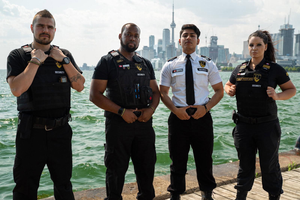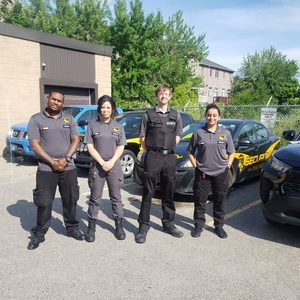
An alarm can tell you something has happened. It cannot tell your pharmacist what to do when someone threatens the team at the prescription counter. For pharmacy owners, that is the gap between equipment and a workable security plan.
Effective pharmacy security in Ontario starts with properly secured drugs, trained employees, controlled access, reliable surveillance and a clear emergency response. Licensed security guards can add a visible, human presence when the risks at your location justify it. Nothing can guarantee that every robbery is prevented.
Your pharmacy is a place where people come for care. Patients should feel welcome, and employees should focus on care, not constantly watching the door. Yet everyday shoplifting, aggressive behaviour, unauthorized access and after-hours break-ins call for different responses.
Whether you operate in Toronto, North York or elsewhere in the GTA, here are practical next steps. Ultimate Security Services provides security guards, mobile patrols, security technology and monitoring for commercial properties. The right conversation begins with your people, your premises and the risks that concern you most.
Ontario Pharmacy Security Rules You Cannot Afford to Miss
Before hiring guards or adding cameras, check your pharmacy’s obligations. Ontario’s College of Pharmacists time-delayed safe policy, updated October 1, 2026, covers accredited community pharmacies and certain remote dispensing locations. It generally requires drugs to be secured in a time-delayed safe inside the dispensary, subject to listed exclusions and exceptional arrangements.
The release delay must be at least five minutes. Staff cannot bypass it with an override code or key. The College also specifies approved signage at public entrances and where patients approach the dispensary. A safe alone is not enough.
If controlled substances are lost or stolen, Health Canada requires pharmacists to report the loss or theft to its Office of Controlled Substances within ten days after becoming aware. Emergency police calls are a separate step.
These rules protect inventory and clarify staff responsibilities. Keep them in written procedures that everyone on shift can find and understand. Security personnel can support those procedures, but they cannot replace the pharmacist’s duties or the College’s requirements.
Practical Ways to Strengthen Pharmacy Security in Ontario
Start with a walk-through while your pharmacy is open and after closing. Review recent incidents, entrances, lighting, staff-only doors and the route employees take to their vehicles. Ultimate Security Services offers property security assessments and consulting that can help businesses prioritize actual vulnerabilities.
Next, keep public entrances visible and restricted areas controlled. Check that your time-delayed safe is used correctly. Position cameras to cover appropriate public approaches without exposing private patient conversations or records. Test alarms, and decide who receives alerts when the pharmacist has gone home.
A licensed guard may help observe entrances, manage agreed access procedures and report concerns. Guards and cameras work better when everyone knows what happens next. Ultimate Security Services’ security technology includes cameras and access-control systems, while its Operations Centre supports monitoring and incident coordination for connected client sites.
Finally, rehearse safe robbery responses and review closing procedures. If your pharmacy shares a plaza or has an isolated rear entrance, consider whether scheduled mobile patrol checks fit your assessed needs. Your plan should work during busy hours and quiet closing shifts.
What Should Your Pharmacy Team Do During a Robbery?
If a robbery happens, medications and cash are never worth an employee’s life. Your team’s first job is to stay safe, not to apprehend the person responsible. Halton Regional Police’s pharmacy robbery guidance advises staff to remain calm, obey demands, avoid arguments and never try to disarm someone carrying a weapon.
Do not expect an employee to improvise under pressure. Agree on responsibilities beforehand. Who calls 911 once it is safe? Who helps patients move away from danger? Who contacts the designated pharmacy manager? Use silent alarms only when safe.
After the person leaves and the area is safe, call the police. Keep people away from anything that may be evidence and record what witnesses remember without turning it into an interrogation. Follow the pharmacy’s controlled-substance inventory and reporting procedures, too.
The next day matters. Employees may be shaken without physical injuries. Check in with them, review what worked and address the gaps. Ultimate Security Services can discuss the role of on-site security personnel within a broader response plan, but the immediate priority is always human safety.
Does Your Toronto Pharmacy Actually Need a Security Guard?

Not every pharmacy needs a guard, and one cannot replace compliant narcotic storage. The better question is whether your current arrangements leave employees exposed at particular times or in particular areas.
Think about repeated threats, concerns raised by your team, high-traffic periods, late closing hours and previous incidents. A pharmacy in a busy Toronto plaza may need a different plan from a quieter location in Vaughan or Mississauga. Compare on-site guards, after-hours patrols and monitoring against the problems you have identified.
Ultimate Security Services describes its guards as screened, trained and equipped for communication with its Operations Centre. Its security guard service also includes consulting to review procedures and potential vulnerabilities. Ontario requires security agencies and individual guards to hold appropriate licences, which you can verify through the province’s licensing guidance.
Ask what guards will do, how incidents escalate and who supervises them. Ultimate Security Services can discuss those options with you so the final plan reflects your pharmacy, not a standard retail checklist.
Protect Your Pharmacy Team Before the Next Security Scare
You work hard to make your pharmacy a place people trust. Your staff remember patients needing extra time, parents picking up prescriptions and familiar faces. They deserve to feel supported while doing that work.
Security need not make your counter feel like a checkpoint. It should make responsibilities clearer, help reduce avoidable risks and give your team a dependable way to ask for help. That might mean better cameras, access procedures, patrols or a guard during higher-risk hours.
Since 1997, Ultimate Security Services has provided security services in Toronto. The company offers trained guards, mobile security, cameras, access control and an Operations Centre. Ultimate Security Services can review your concerns and discuss an approach suited to your location and hours, whether you manage one pharmacy or several GTA properties.
Do not wait for an incident to discover who is responsible for the next step. Contact Ultimate Security Services to discuss a pharmacy security assessment and find out which protective measures make sense for your team.

Frequently Asked Questions
Choosing the right protection raises practical questions, particularly when you need to balance staff wellbeing with pharmacy regulations.
Are security guards mandatory for Ontario pharmacies?
No blanket on-site guard requirement appears in the College’s time-delayed safe policy. Your needs depend on assessed risks, hours and staff concerns. If you hire guards, verify the agency and individual licences.
How long must an Ontario pharmacy’s time-delayed safe take to open?
The College requires a minimum five-minute delay for safes covered by its policy. There are exclusions and exceptional arrangements, so consult the current policy.
Can cameras prevent pharmacy robberies?
Cameras preserve recordings and improve visibility, but cannot guarantee prevention. Ask who monitors alerts, what action follows and how recordings are protected. Ultimate Security Services offers surveillance and monitoring options that can be discussed alongside guard coverage.
Who reports stolen controlled substances?
The pharmacist is responsible for reporting losses or thefts to Health Canada’s Office of Controlled Substances within ten days after becoming aware. Staff should alert the pharmacist immediately and follow the pharmacy’s emergency and evidence-preservation procedures.