You lock the doors at 6 p.m. The cameras are recording, the alarm is armed, and from the street your building looks secure. But what about the rear loading entrance sitting in darkness, the camera blind spot beside the parking lot, or the access credential nobody remembered to cancel?
Those are the gaps that can stay invisible until something happens.
If you manage a commercial property in Ontario, you should not have to guess where your biggest exposure is. Conducting a Security Risk Assessment Ontario for your commercial property helps you identify what needs protection, where vulnerabilities exist, and which improvements deserve attention before you spend money on guards, patrols, cameras, alarms, or access control.
Ultimate Security Services works with businesses and properties across Toronto and Ontario through security guards, mobile security, surveillance, access control, monitoring, and security consulting. But the smartest security decision does not begin with choosing a product. It begins with understanding your property, your routines, and the risks actually present.
What Should a Commercial Property Security Risk Assessment Tell You?
A useful assessment should answer three questions: what are you protecting, what could realistically go wrong, and how prepared are your current security measures to respond?
Start with the people, assets, and operations that matter most. That may include employees, tenants, visitors, inventory, vehicles, loading areas, restricted rooms, equipment, or business-critical spaces. Then review what has already happened. Incident reports, alarm activations, unauthorized access, theft, vandalism, suspicious activity, and recurring complaints can reveal patterns that are easy to miss when each event is viewed alone.
Ultimate Security Services includes physical safety and security tours, incident-report reviews, and reviews of property security procedures and equipment within its security consulting services. That matters because a strong commercial security risk assessment should connect what you see today with what has happened before.
Do not build the assessment around every threat imaginable. Focus on vulnerabilities relevant to your site, operating hours, users, and location. That keeps the process practical and makes recommendations easier to prioritize.
Walk the Property During the Day and After Hours
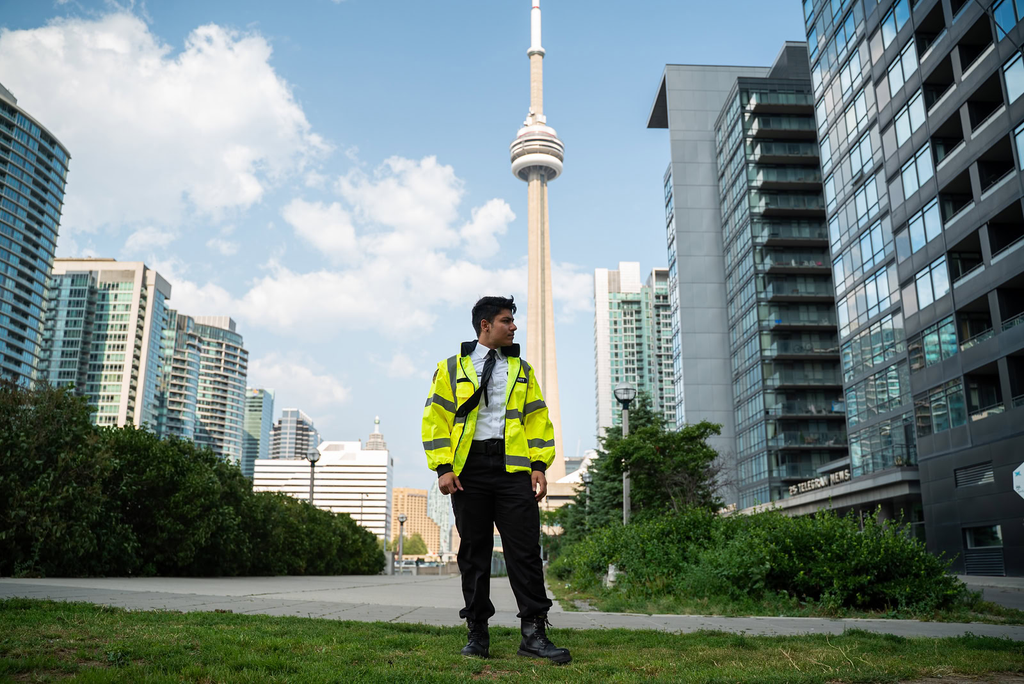
Your property can look completely different after employees, tenants, and delivery crews leave. A physical security assessment should include both daytime and after-hours conditions.
Start outside. Look at fencing, gates, parking areas, loading docks, landscaping, windows, lighting, entrances, emergency exits, and places where visibility drops. Then move inside and review reception areas, stairwells, shared corridors, storage spaces, restricted rooms, and transitions between public and private areas.
After hours, look again. Which entrances become isolated? Are parking areas still visible? Does exterior lighting leave dark pockets? Can someone approach a loading area without being noticed? Are doors that were naturally supervised during the day now unattended?
This is where you may discover a need for different coverage. Ultimate Security Services states that its mobile patrol service can check building access doors, emergency exits, parking areas, and site perimeters using marked patrol vehicles. That does not mean every property needs patrols. It means your assessment should identify where existing coverage ends and whether a meaningful gap remains.
Review Existing Security Controls and Rank the Real Risks
Once you understand the property, test the measures protecting it. Look at security guards, mobile patrols, CCTV, alarms, access control, locks, visitor procedures, lighting, incident response, and remote or AI-assisted monitoring.
Ask one practical question about each control: what specific risk is this solving?
A camera may cover a loading entrance, but what happens when it detects activity after hours? An access control system may secure a door, but are old credentials removed when staff or contractors leave? A front-desk guard may manage visitors, but who is watching the rear perimeter or parking area?
Ultimate Security Services provides on-site guards, mobile security, CCTV and access control solutions, surverillance monitoring, and AI-powered security options. These can work as separate or layered controls depending on the property.
Then rank each vulnerability by likelihood and impact. A frequently unsecured loading entrance protecting valuable inventory should not receive the same priority as a minor blind spot in a low-traffic area. Ranking risks keeps your budget focused on the problems most likely to affect your people, property, and operations.
Use a Commercial Property Security Checklist Without Turning It Into a Box-Ticking Exercise
A security checklist is useful only if it makes you look more closely at how the property operates. The goal is not to mark every item “complete.” It is to uncover weak points that are easy to overlook during a normal workday.
Review the perimeter, doors, windows, parking areas, loading zones, exterior lighting, CCTV coverage, access credentials, visitor procedures, contractor access, alarm response, patrol coverage, incident reporting, and after-hours routines. For each area, ask whether the current control still matches the way the property is used today.
Commercial properties across Toronto and Ontario change. Tenants move, hours shift, staff turn over, renovations alter sightlines, and new access points appear. A security measure that worked well two years ago may no longer address the same risk.
Ultimate Security Services can support this process through property security tours and reviews of existing procedures and equipment. The value of the checklist is not the document itself. It is the conversation it forces you to have about what has changed and what now requires attention.
Turn the Assessment Into a Practical 2027 Security Plan
A risk assessment only becomes valuable when it changes what you do next. Once the most important vulnerabilities are identified, organize recommendations by urgency, cost, and the risk each action should reduce.
Some improvements may be immediate. A failed light, broken lock, outdated credential, unclear closing procedure, or poorly defined incident response may be fixable without a major capital project. Other issues may require more planning, such as improving camera coverage, adjusting patrol schedules, strengthening access control, adding remote monitoring, or introducing on-site security at specific times.
Ultimate Security Services provides these services across Toronto and Ontario, giving commercial property owners and managers several options when a layered approach is appropriate.
As you prepare a 2027 security budget, avoid treating security as a list of products to purchase. Tie every proposed expense back to an identified vulnerability. If you cannot explain what risk an investment is meant to reduce, revisit the recommendation.
A clear plan should tell you what needs attention first, what can wait, who is responsible, and when the property should be reassessed.
Know Where Your Property Stands Before the Next Incident
You should not have to wait for a break-in, access issue, or recurring security complaint to discover where your commercial property is vulnerable. If you are planning your 2027 budget, managing a multi-tenant building, dealing with repeated incidents, or questioning whether your current security setup still fits the property, now is the time to review it.
Ultimate Security Services has served Toronto since 1997 and provides security guards, mobile patrols, security technology, access control, surveillance, monitoring, and security consulting. Its consulting services include physical property security tours, incident-report reviews, and reviews of security procedures and equipment.
That means Ultimate Security Services can help you move from uncertainty to a clearer, property-specific security plan instead of simply adding more equipment and hoping it solves the problem.
Your next security investment should have a reason behind it. Start by finding the risks that matter most.
Contact Ultimate Security Services to discuss a professional commercial property security assessment and build a security plan around the real needs of your Toronto or Ontario property.
Frequently Asked Questions
How often should a commercial property security risk assessment be conducted?
A commercial property should be reassessed whenever there are meaningful changes to the building, tenants, operating hours, access points, security systems, or incident history. Many property managers also include security reviews in their annual planning process so emerging vulnerabilities can be addressed before the next budget cycle.
What should a commercial property security risk assessment include?
A thorough assessment should review the property perimeter, entrances, exits, parking areas, loading zones, lighting, CCTV coverage, access control, alarm response, visitor procedures, incident history, and after-hours conditions. The goal is to identify vulnerabilities, understand their potential impact, and prioritize the risks that need attention first.
Can a property manager conduct their own security assessment?
Yes. A property manager can perform an initial walkthrough and identify obvious concerns such as poor lighting, damaged locks, access-control issues, or camera blind spots. However, larger or more complex properties may benefit from an independent professional assessment that reviews security procedures, physical conditions, technology, and incident history together.
What is the difference between a security audit and a security risk assessment?
A security audit generally reviews whether existing security measures and procedures are working as intended. A security risk assessment goes further by identifying threats and vulnerabilities, evaluating likelihood and potential impact, and helping property managers decide which risks should be addressed first.