You lock your doors at night. You turn off the lights. You assume your home will still feel safe in the morning.
But across Ontario, that sense of security is being tested.
According to the Toronto Police Service, break-and-enter incidents rose by 31.5 percent year over year. That is not just a statistic. It represents families returning home to forced doors, stolen valuables, and a lasting feeling that their privacy was violated. Residential break-ins in Ontario are increasingly crimes of opportunity. Unlocked side doors, poorly lit driveways, and homes that appear empty during the day remain common targets.
For homeowners searching for real residential break-in prevention Ontario, the question is simple: how do you reduce the risk before your property becomes a target?
Prevention starts with fundamentals such as reinforced locks, motion lighting, and visible security measures. But experience shows that individual upgrades alone are not always enough. Criminals are less likely to act in neighbourhoods where residents are alert, communication is active, and a visible security presence exists.
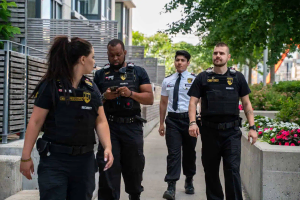
That is where structured neighbourhood watch programs and mobile patrol services make a measurable difference. Ultimate Security Services works with Ontario communities to strengthen local vigilance through coordinated neighbourhood watch initiatives and professional mobile patrols that add visible deterrence and rapid response capability. When residents and trained security teams work together, the environment changes. Risk decreases. Confidence returns.
If break-and-enter rates are rising across Ontario, proactive protection is no longer optional. It is a practical step toward keeping your home, your family, and your neighbourhood secure.
Current Crime Data in Ontario
Residential break-ins in Ontario are not isolated incidents. They are part of a measurable trend.
According to the Toronto Police Service 2024 year-end report, break and enters increased by 31.5 percent compared to the previous reporting year. York Regional Police also reported increases in property-related offences, including residential break-ins and vehicle theft. These figures reflect reporting periods covering 2023 to 2024.
Statistics Canada continues to identify break and enters as a significant category within property crime across the province.
For homeowners, this means risk is not hypothetical. Many residential break-ins happen during daytime hours when families are at work or school. Front doors, sliding doors, garage entry points, and unsecured exterior doors remain common access routes. Forced entry through weakened door hinges or glass panels is frequently reported.
This is why residential break-in prevention in Ontario must be proactive. Ultimate Security Services monitors these trends closely to design neighbourhood watch Ontario programs and mobile patrol residential security strategies based on real crime patterns, not assumptions.
When crime data rises, prevention must rise with it.
Understanding Break-and-Enter Incidents in Ontario
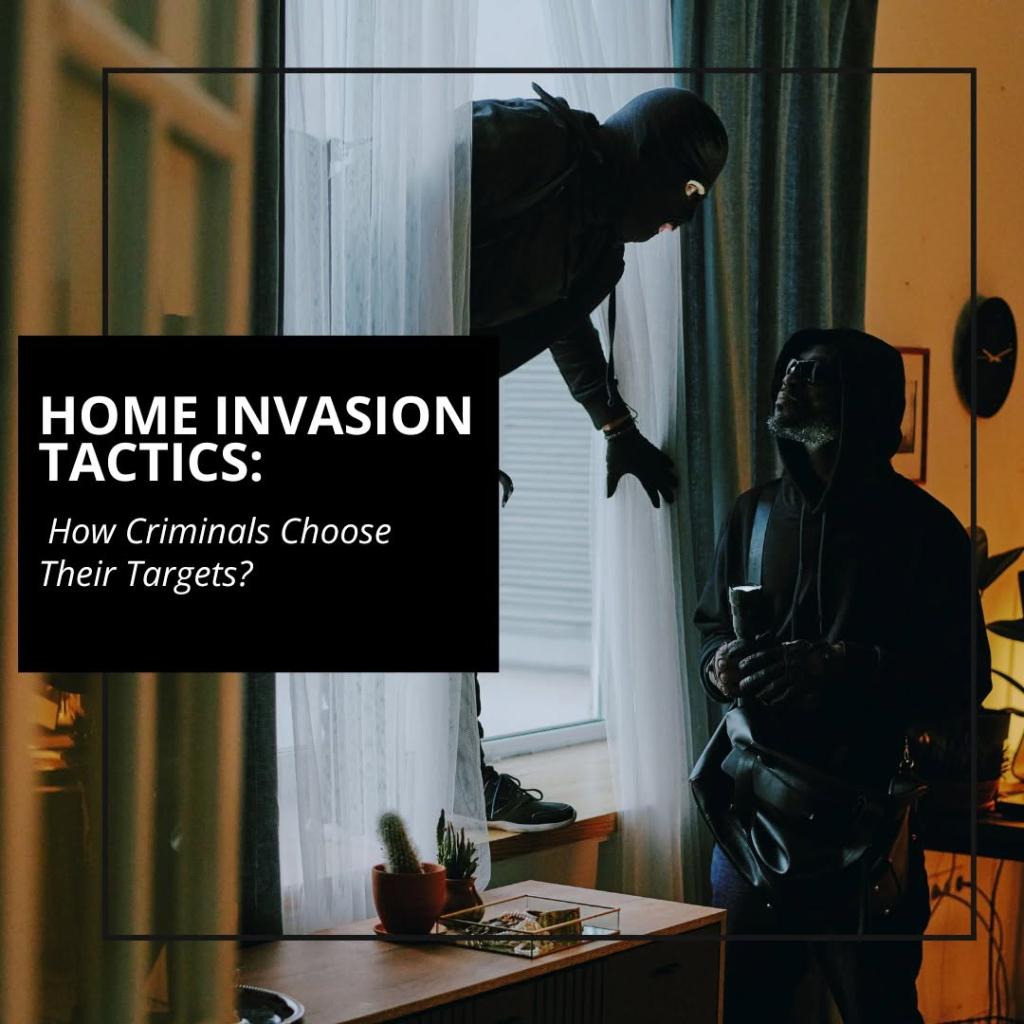
A break-and-enter involves unlawfully entering a property with intent to commit theft or another offence. In Ontario, most residential break-ins are crimes of opportunity.
Common entry points include:
- Unlocked front doors or side exterior doors
- Sliding doors without reinforced tracks
- Windows without security film
- Garage doors left partially open
Homes without visible security measures are more likely to be targeted. Properties lacking a home security system, alarm system, or security cameras present lower perceived risk to offenders.
Break-ins often occur during daylight hours. Many involve quick entry, rapid theft of valuables, and exit within minutes. Jewelry, electronics, cash, and items not stored in a safety deposit box are common targets.
High-visibility neighbourhoods tend to experience fewer repeat incidents. That is why Ultimate Security Services focuses on layered protection. Residential break-in prevention in Ontario works best when physical reinforcement, surveillance systems, and coordinated neighbourhood awareness operate together.
Understanding how break and enters happen is the first step. Preventing them requires structure.
Preventing Break-Ins: Practical Steps for Ontario Homeowners
Effective residential break-in prevention in Ontario starts with strengthening physical vulnerabilities.
Focus on:
- Installing high-quality deadbolt locks on all exterior doors
- Reinforcing strike plates and door hinges
- Securing sliding doors with secondary locking mechanisms
- Installing security bars where appropriate
- Applying security film to accessible glass
Lighting matters. Motion sensor lights and motion detectors reduce concealment. Criminals prefer darkness and limited visibility.
Technology adds another layer. A professionally installed security system, integrated alarm system, and visible surveillance system increase perceived risk. Security cameras positioned at entry points act as deterrents and evidence collection tools.
Insurance providers often recommend documented security measures, which may influence claims outcomes after residential break-ins.
Individual upgrades reduce risk. But coordinated neighbourhood security creates stronger deterrence. That is where Ultimate Security Services enhances impact. By combining home security systems with structured neighbourhood watch Ontario programs and mobile patrol residential security coverage, Ultimate Security Services helps transform isolated households into protected communities. Security works best when it is visible and collective.
Impact of a Structured Neighbourhood Watch Ontario Program
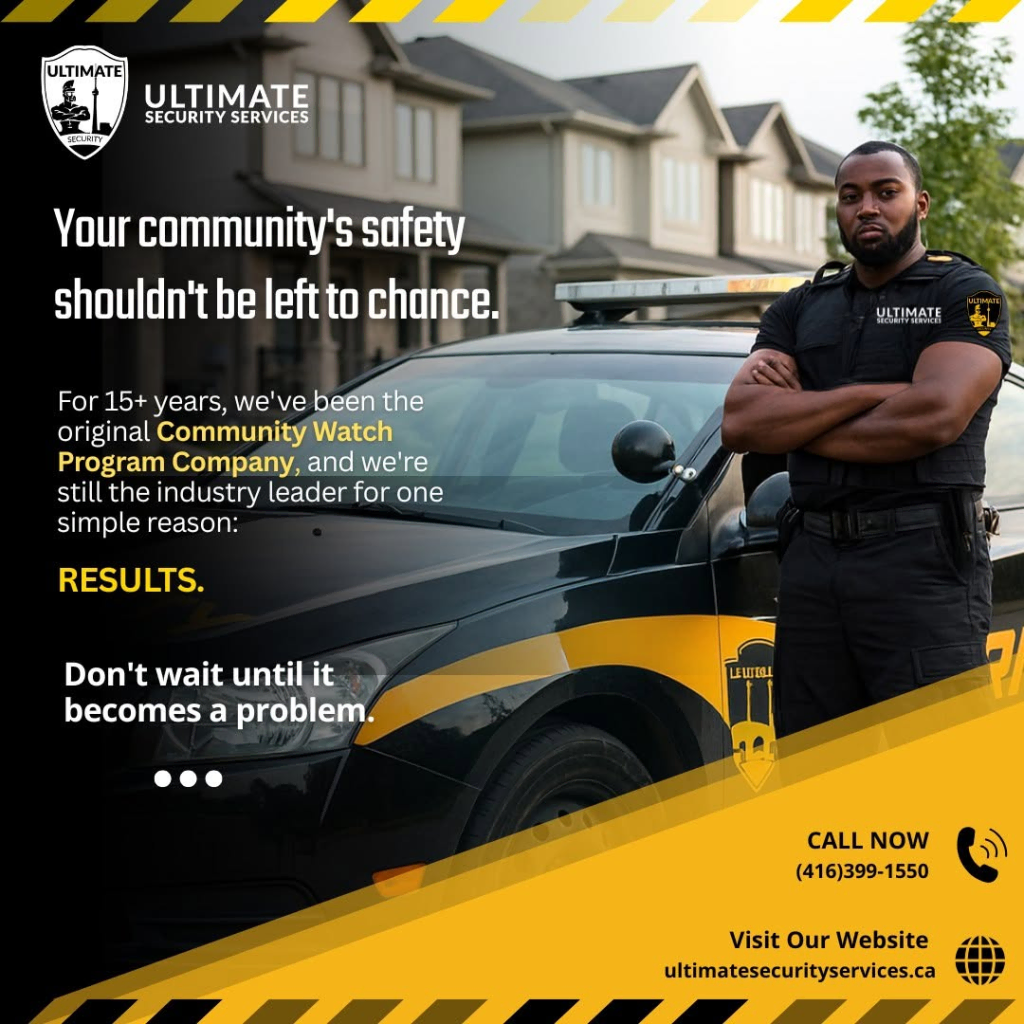
Not all neighbourhood watch groups are equal.
An informal chat group is not the same as a structured program supported by security professionals.
How a Structured Neighbourhood Watch Program Works in Ontario
Ultimate Security Services designs neighbourhood watch Ontario programs that include:
- Coordinated communication channels
- Clear reporting protocols
- Defined response pathways
- Collaboration with patrol units
- Scheduled security visibility
Residents are trained to identify suspicious behaviour without confrontation. Reports are documented and escalated appropriately. Patterns are tracked. Patrol deployment can be adjusted based on activity.
Visible signage indicating a monitored neighbourhood alters offender decision-making. Criminals evaluate effort versus risk. High-awareness areas increase perceived risk.
In communities supported by Ultimate Security Services, neighbourhood watch is not passive. It operates alongside mobile patrol residential security units, alarm response teams, and structured oversight.
That integration is what differentiates Ultimate Security Services from informal community groups. It creates consistency, accountability, and real deterrence.
Role of Mobile Patrol Residential Security
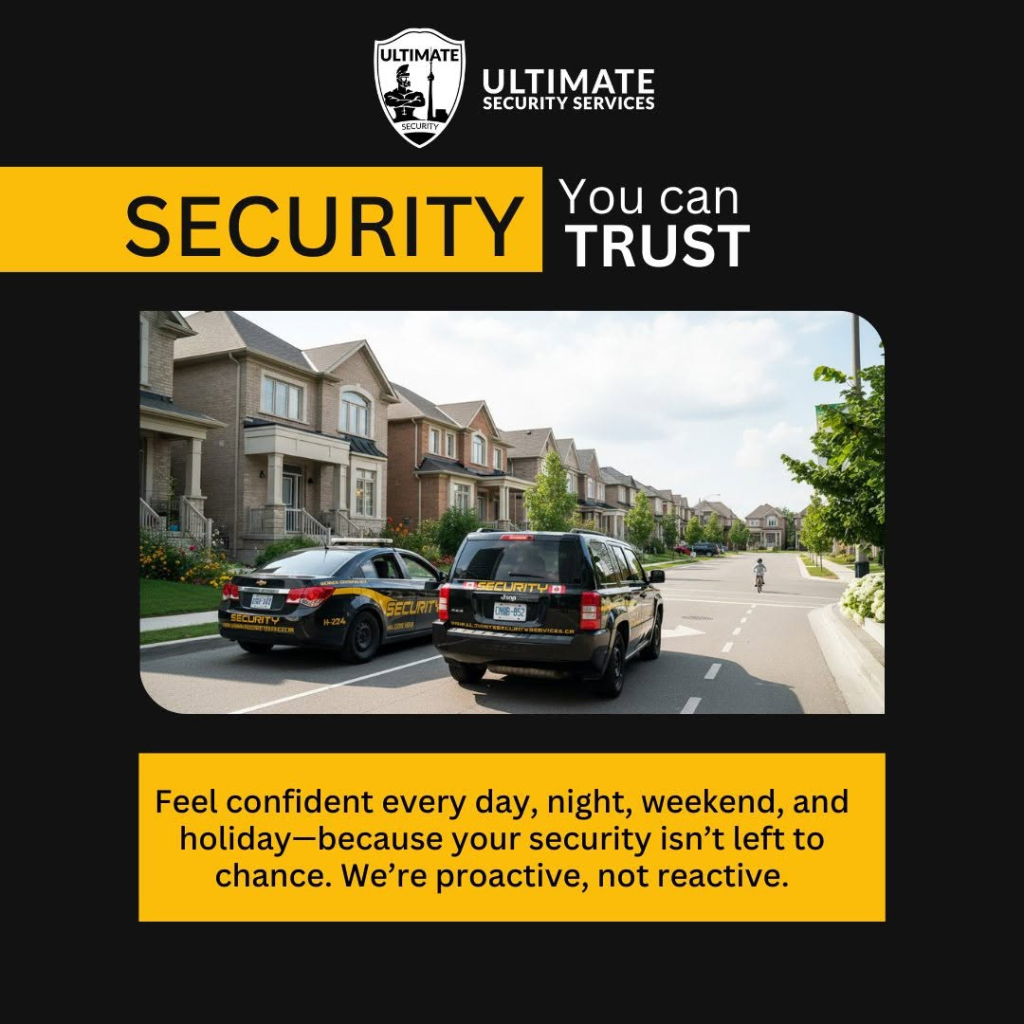
Visibility changes behaviour.
Mobile patrol residential security adds a professional layer to residential break-in prevention in Ontario.
Ultimate Security Services deploys:
- Randomized patrol timing
- GPS tracked patrol routes
- Documented incident reporting
- Alarm system response integration
- Vacation property checks
Unpredictability matters. If patrol timing is fixed, offenders adapt. Randomized routes disrupt planning.
In neighbourhoods where patrol vehicles are visibly present multiple times per week, opportunistic offenders often shift focus elsewhere. Patrol officers also inspect vulnerable areas such as rear access points, sliding doors, and poorly lit exterior doors.
Mobile patrols do not replace a home security system. They reinforce it.
When Ultimate Security Services integrates alarm system monitoring, surveillance system verification, and patrol response, incidents can be addressed quickly and professionally.
Layered deterrence reduces repeat targeting. That is the advantage of coordinated protection.
Why Criminals Avoid High-Visibility Neighbourhoods
Offenders assess three factors:
- Ease of entry
- Likelihood of detection
- Speed of escape
Homes with reinforced deadbolt locks, security cameras, motion sensor lights, and active alarm systems increase detection risk. Neighbourhoods supported by Ultimate Security Services add another layer: visible patrol vehicles and organized community vigilance.
Criminals prefer low-effort, low-visibility targets.
When a neighbourhood displays signage, active communication, and regular patrol presence, perceived risk outweighs reward. That calculation often redirects activity elsewhere.
Residential break-ins frequently occur in clusters. If one property appears vulnerable, others nearby may follow. Breaking that pattern requires visible intervention.
Ultimate Security Services focuses on altering offender perception. When visibility rises, risk rises. When risk rises, behaviour changes.
Protect Your Neighbourhood Before It Becomes a Target
Break and enters in Ontario increased by 31.5 percent. Waiting for your street to experience one is not a strategy.
Ultimate Security Services provides structured neighbourhood watch Ontario programs, mobile patrol residential security, alarm system response, and customized residential break-in prevention plans.
Whether your community needs enhanced surveillance systems, coordinated patrol routes, or a fully integrated home security system strategy, Ultimate Security Services delivers layered protection designed around current crime trends.
Security is strongest when it is organized, visible, and consistent.
If your neighbourhood is ready to move from awareness to action, schedule a consultation with Ultimate Security Services today. Request a neighbourhood security assessment and build a plan that protects what matters most.

Frequently Asked Questions
Are residential break-ins increasing in Ontario?
Yes. Toronto Police Service reported a 31.5 percent increase in break and enters year over year in its 2024 reporting period. Other Ontario regions have reported rising property crime trends.
What is the best way to prevent residential break-ins?
Combine reinforced exterior doors, deadbolt locks, motion sensor lights, and a professionally monitored security system with neighbourhood watch Ontario programs and mobile patrol residential security coverage.
Do neighbourhood watch programs reduce crime?
Structured programs supported by organizations like Ultimate Security Services improve reporting, increase visibility, and raise perceived offender risk, which contributes to deterrence.
Are mobile patrols effective in residential areas?
Yes. Randomized, GPS tracked patrol routes increase unpredictability and provide rapid alarm system response, reducing repeat targeting in monitored communities.
What features should a home security system include?
Look for integrated alarm systems, security cameras, motion detectors, remote monitoring capability, and compatibility with surveillance systems for full coverage.
How can I strengthen my exterior doors?
Install reinforced strike plates, upgrade door hinges, use high-quality deadbolt locks, apply security film to glass panels, and secure sliding doors with secondary locks.
TL;DR
Break and enters in Ontario increased 31.5 percent. Residential break-in prevention in Ontario requires reinforced doors, security systems, neighbourhood watch Ontario programs, and mobile patrol residential security from Ultimate Security Services.